


In our four-part series, we are delving into all you need to know about what happens in a recession and economic downturn. This includes how to prepare, what the government should be doing to support SMEs, and most importantly how to thrive.
So far we have dived into 3 steps to prepare for a recession and how Tim Rylatt, an experienced UK business coach, believes the government should support SMEs in the expected recession. So if you have not had a chance to read these yet, please take a look. We hope you find them helpful.
Within this article, we will be sharing what happens in a recession that impacts SMEs, in order to provide SMEs with some valuable insight to allow businesses to prepare and make the right decisions to stay afloat during this turbulent economy and an expected recession.
All businesses are affected by adverse market conditions but smaller companies often have less of what we call a ‘war chest’. This is the business’s ability to change and see out a difficult period. With SMEs often having limited spare capital or funds to survive past one month of zero sales of goods and services, they are therefore more sensitive to these changes.
Our aim is to help SMEs navigate these challenges and changes quickly and efficiently.
What happens in a recession to cause a shift in demand?
A decline in non-necessity items, which we call discretionary purchases, is commonly experienced during an economic downturn. An example of this could include beauty treatments, as consumers can live without these.
What however is also common is a demand curve shift. This is where those with disposable income, who can still afford discretionary items during an economic downturn will look for the best value for money or cheapest items, so they are more price sensitive.
This means that businesses that sell non-necessity items can still survive. They just need to ensure their products or service is perceived as value for money and is competitively priced.
Anyone who is a regular reader or listener to UK Growth Coach’s blogs and talks will know that we are not referring to discounting when we talk of competitive pricing!
Reducing prices just means cutting your margins which won’t help you or your business in the short or medium-term! This is about being priced fairly and having a value statement to back it up.
At the other end of the spectrum, there are businesses that experience higher demand during economic uncertainty. An example of this is during COVID the demand for life insurance increased and delivery services were in high demand.
The key really is to seek opportunities and to ideally sell perceived necessity products or services, or, if this is not possible, ensure your offering is competitively priced and is perceived as value for money.
Discounting is often something that happens in a recession, but it shouldn’t be!
Supplier challenges
Another factor that needs to be considered when examining what happens in a recession is your own supply chain.
Often, suppliers increase their prices to combat their rising costs. This means businesses either have to pass this cost on to customers and increase their prices (when consumers are already price-conscious and therefore you risk even fewer consumers buying from them), or choose to absorb the cost themselves. With small margins already, this is not always possible or financially sustainable.
There, of course, is a third option which is looking for a different supplier but this does take time and other suppliers’ costs will likely have gone up too. Still, it is worth looking into and investing the time in maximising the efficiency of your own supply chain.
What happens in a recession to make supply chains collapse?
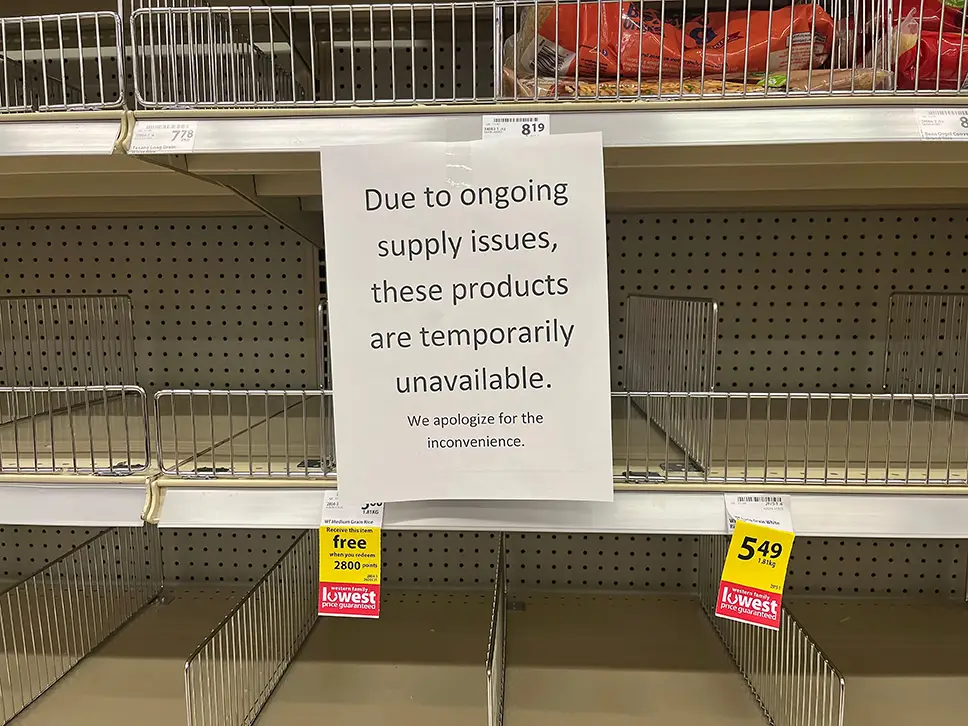
Added to this, if the small business owner in question is surviving but their supplier chain collapses due to their main supplier going out of business, this can cause major implications and a new supplier will need to be found promptly to fill the supply gap.
To prepare for this we would recommend ensuring you have a list of alternative suppliers you could contact if issues such as this arise.
Supply chain terms changing
This is also related to cash flow, but sometimes during a recession suppliers will change their supply chain terms. For example, instead of having a 60-day arrangement, this then changes to a 30-day arrangement.
As you can imagine, this will cause significant cash flow issues where some businesses will not be able to meet this demand, causing them to either go into debt or lose them as a supplier.
In short, examine your own supply chain, have a Plan B and backups in place and ensure you are proactively managing and looking at this side of your business. It may be an area that under normal times you leave to function without too much oversight, but during an economic downturn, a change of behaviour is needed from business owners.
Cash flow issues
Bad debt and an unexpected delay in receiving payments have a big impact on SMEs even in good times, let alone during a downturn or recession.
When there is an economic downturn consumers are often cash-strapped and often either pay late, pay in part, or in some cases when the individual cannot pay, the business ends up having to foot the bill. This in itself can cause a lot of companies to fail. Builders are a common example of this as they perform their service on the understanding that they are paid at the end.
Our advice here is to make sure you are on top of your debtors’ list – know what is due to come in, on what terms, what hasn’t been received and what is being done (timely) to resolve that.
We find it time and time again, that business owners ‘assume’ payments are made on time or are only half aware of late or partial payment, but often well after in fact.
If you have a regular arrangement with an accountant, they can keep you aware. But is month-end alone sufficient when money is tight? If you can’t do this yourself or have a member of your team managing this, there are cost-effective solutions such as virtual assistants that can help. A few hours a month of someone’s time to bring in your bad debt is often a worthwhile investment.
SMEs cut the wrong costs
When considering what happens in a recession or period of uncertainty, often businesses look to cut costs but often cut the wrong things.
Instead of focussing on cutting off non-necessity items, they instead cut what we call investment costs too. These are costs that impact the business in the long run making it even harder to recover and include marketing, training and research and development.
In the short term, you may be able to survive without new leads coming in from marketing or without developing your product or service, but this is simply not sustainable long-term. If you truly have to cut investment costs, have a time limit and a plan for re-introducing them at the very least.
Support network
SMEs will often look to cut their costs by either stopping external services altogether such as virtual assistants or reducing the package they have with the company so they either only receive part of the service or perhaps they receive it less frequently e.g. IT.
Doing this leaves others within the business to pick up the task at hand. The downside to this is that they may not be trained to perform this task, may take them longer to do it and will also take them away from their main role. This leads to an underperformance of the task being completed and even burnout from existing employees who are being stretched. Therefore, it’s a decision to give a great deal of consideration towards before making it.
What businesses can do…

By understanding what happens in a recession and what SMEs can do to prepare their business for a turbulent time, companies can navigate through and come out the other side.
We’ve identified a selection of the common challenges, and common mistaken actions that business owners take to overcome them. It may be with the right intentions and goal in mind, but these frequently chosen paths can lead to unintended consequences and negative medium-term outlooks for the business; all of which we want to avoid!
If you would like to receive some small business coaching to gain an outsiders perspective of your business and its performance, in the context of what happens in a recession, whilst upskilling and developing your knowledge to understand what you can do please call +44 (0)1444 440500, or email, Tim Rylatt at tim@growthcoach.co.uk.
Coaching sessions will be tailored to your needs and can consist of a series of coaching and mentoring depending on your aspirations, challenges or priorities that need addressing.