

I believe this is a vital question if you want to make substantial progress in your company. However, for almost all SME businesses, there is a big problem. As an Eastbourne business coach, working across Sussex, here’s my view on why that’s the case.
Their goals aren’t the right goals
This isn’t to say that they are poorly written or even poorly considered.
In most cases, I find people who have created business goals have given them a good level of thought.
The issue is much more basic than that, and applies to both short-term goals and long-term goals alike.
Most business goals are too logical, and lack true emotional engagement

My experience tells me this is due to two problems…
- The goals are not based upon a meaningful company purpose to which the team is truly engaged. They are most often based on the shareholders aim of making profit.
- The goals are not connected to an advancement of the business owner’s situation beyond personal income.
Let’s explore that together for a moment to see why this situation comes about.
In most cases, when starting a business, we will sit down with an investor, a bank, or an accountant.
All of these advisors and assessors are financially focused.
Their jobs are to ensure that:
- an investment creates a clear return
- a loan is repaid with interest
- a company manages the money compliantly
- tax liability is minimised
All essential, but all focused on the money, rather than the broader business purpose. Therein lies the problem!
You see, when the performance motivations of human beings are explored, financial reward is not our only driver.
In fact there are a range of factors that encourage us to perform best. Financial reward comes in further down the list than you may expect.
Why does this matter when setting effective business goals?
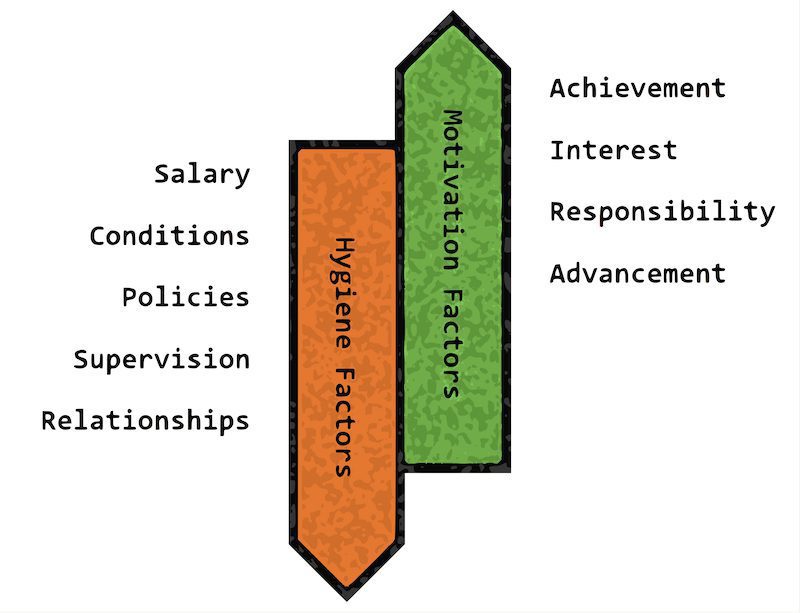
Almost all businesses involve people, and most SMEs involve employed director business owners.
This means that when setting goals for the company, we need to remember the human component.
If we want the ‘discretionary effort’ of our team to be engaged, we must ensure that the motives are connected.
This means drawing it back to the business purpose (or defining one if you don’t yet have something engaging)
- Who are you serving, how, and why does it really matter?
- What are the emotional drivers that unify the team?
- What message will make them fight like lions to achieve progression towards that goal?
- As a business owner, (beyond profit) what inspires or delights you in your work?
- What are you trying to progress your role towards?
- How would this transition create opportunities for career progression for your team in succession?
By looking carefully at these goals you can find the spark to ignite the fire of enthusiasm for achievement. You, and your team, will be much more connected and driven to do what is necessary to hit those milestones.
Yes, you do need to have a set of logical, pragmatic, and well documented pure business goals. You need ones for direction, team development, marketing, sales, operational delivery, and financials. But you also need the ones that are emotionally engaging.
Without the passion within yourself, and within those working with you, the likelihood of commitment occurring is slim. Without commitment, goal fulfilment is highly unlikely.
Leading by my own example…
At UK Growth Coach (where I work as an Eastbourne business coach), the first thing I wrote when I founded the company was the purpose statement. I chose to do this as I had seen first-hand the power of engagement with purpose.
- The shine in the eyes of business leaders who had a true purpose was obvious.
- Their teams exuded an energy where they had decided to get behind that cause.
- Moreover, I had seen the progress rates achieved by businesses with purpose. This was starkly different from those focused on ‘away from’ goals.
That’s an important distinction to note. The difference between towards and away goals.
Away from goals focused on how we can avoid an issue of pain. These goals generally prompt us to a minimal achievement only as once the pain has stopped, the motive is removed.
Towards goals, by contrast, are usually relatively unlimited, or aspirational. They encourage innovation and full commitment. When I think of goals like this, I think of the space race goal of the late 1960’s… back then almost unbelievable, and hugely unifying for the team involved.
What to do now
I wrote this blog to cause a moment of self-reflection for business owners. To encourage them to explore their own purpose, to connect that (regularly) to the process of business planning and goal setting. I hope you have found it interesting.
If you want to see how this approach has worked in action, you can view testimonials from business owners such as yourself and hear what the impact has been for them.