

Spend time planning your business' future
When running your own business, you may get caught up in the actual running of it and the day-to-day tasks, and forget about planning for business growth.
To make sure your business is a successful one and achieve the business growth you want, you need to have a forward-looking approach and plan for the future.
This is where business growth plans come into play. This blog will explain what they are, why it’s so important, and what to include in one.
What is a Business Growth Plan?

This is a company’s growth forecast and is a roadmap for how a company will grow in the next one to two years. It outlines a company’s business goals and should be broken down into quarterly objectives.
The business growth plan is reviewed at the end of each quarter to see what goals were met and missed during that period. This can be done by management to revise the business growth plan to reflect the current market standing.
At UK Growth Coach, we would additionally discuss with you your purpose (a legacy beyond profit alone), vision (the envisioned future business), and mission (clarity on the intended client experience).
Why are Business Growth Plans so important?
So why do business owners write plans? Simply ‘because they realise that it’s easier to build a house if you know what it’s supposed to look like at the end, and have considered what order to do things’, says our expert coach, Tim Rylatt.
Here are a few reasons why a growth plan matters:
- You avoid potential losses if your market share stays the same
- You can start regaining early losses faster and start paying off debt
- Increase in your understanding of revenue plans
- Better able to grow your business and achieve your goals!
What to include in your Business Growth Plan
Your business growth strategy may take a bit of time to put together, but if you want a secure plan for the future, it’s a no-brainer.
These types of plans focus specifically on expanding the business and how to achieve that. Knowing where to start with making a business growth plan can be tough. A standard plan will usually include these things:
- An overview of the business.
- An organisational chart.
- A description of target audiences/clients and their situation/requirements.
- The service or product solutions to deliver on the requirements identified.
- A competitor analysis.
- A description of marketing channels and tactics.
- A targeted financial forecast.
But these are often put in a time capsule and never see the light of day again! That’s why a pragmatic plan is more successful.
Here are a few things a more pragmatic plan includes:
- A summary of why progress matters, and to whom…a meaningful purpose.
- A set of goals that focus on delivering the required progress.
- Clear definition of involvement, accountability, and milestones.
- A time-lined action plan to make it all actually happen!
Purpose is what makes people perform…and people make business happen.

How to achieve business growth
If you’re struggling with writing your business plan, then our business coach can help you.
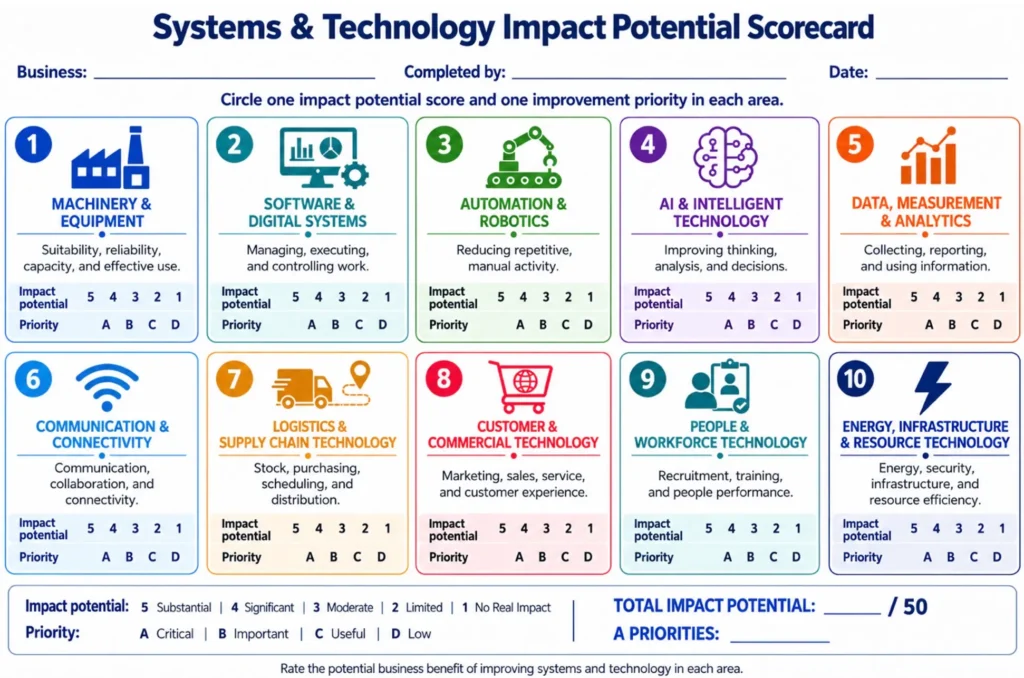
We ourselves have identified 10 main areas of business that require attention in order for businesses to develop and three main levels of progression.
Depending on where your business is at across any of these points, the assistance and support you need will vary.
That is one of the great things about a business coach, it’s specific, tailored, and just right for you.
There are of course common models, approaches, and processes but how they are used and applied, and in what combination, is where an expert coach’s guidance makes the difference between an average business and a great one.
There are multiple key strategies for business growth, so it is vital you pick the right ones for you and your business. These substantive growth strategies in your business will change too as your business progresses. This is why a business coach not only tailors the growth plan to where you are at now, but also how it needs to evolve and change overtime.
Critically any plan needs to be clear what the levers and mechanisms are for growth now and in the future. This could include a number of growth strategies, such as how to increase market share, how to increase sales, an expansion strategy and scaling of the business, improving margins on existing products, in addition to many other growth strategies.