

A booming market
Much like the world of business coaching, the health and wellbeing sector is booming. More and more new businesses are being launched, and there are significant growth opportunities for existing players too. As a health business coach, there are a few pieces of advice we wanted to offer in this competitive market!
It was estimated at the beginning of 2022 that the health and wellness sector is growing between 5-10% per annum globally. For the purposes of the study mentioned above and for this blog we are taking the health and wellbeing sector to refer to health products, fitness, nutrition, wellness-appearance, sleep and mindfulness.

The pandemic fuelled a reassessment of many peoples’ priorities, causing greater awareness and consideration of issues around mental health and people’s overall wellbeing. In a context of ongoing pressure and uncertainty, this consumer demand is certainly not going away any time soon.
It has also hit business’ agendas too, from the duty of care of employers through to differentiation and employee benefits in the battle for attracting and retaining talent.
There is often a wide range of services being offered and equally often, across the marketplace the quality of the services can be just as variable. The problem is that regardless of the quality, these services all fall under the umbrella term of health and wellbeing.
This variation in the type of services available, and the outcomes from it, creates a very big question for the owners of health and wellbeing SMEs to answer:
How can you effectively stand out from your competitors and achieve growth in this crowded marketplace?
A health business coach’s model to help break this challenge down
Such a big challenge needs to be tackled in bite-sized pieces. This blog aims to break down the different components of the issues that health and wellbeing business’ face in this busy marketplace, and to some offer practical solutions and approaches to those headaches!
It doesn’t cover everything but does give an introduction and insights to get you started.
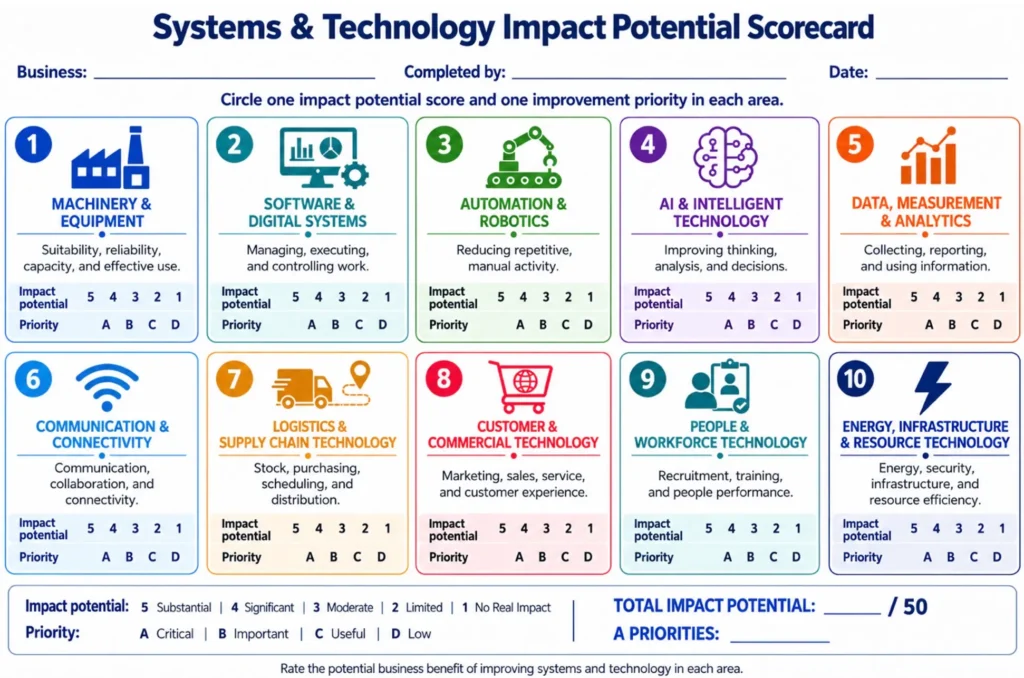
It is useful at this stage to introduce you to one of UK Growth Coach’s models – the Coaching Star. It covers the 10 key areas of business which are vital for success and underpins much of the coaching we do. If any of these areas are under-served, it causes barriers to success.
If we take a few of these points in turn, they offer some insight into the solutions business owners of SME health and wellbeing can take to differentiate themselves in an ever more crowded marketplace.
The three we are going to look at are:
- Business Direction and Company Culture
- Marketing and Sales Strategy
- Owner and Team Performance

1. Business Direction and Company Culture
There won’t be many employees who will be highly motivated to work solely in order to generate more money for the business owner! As a result, they need to understand the bigger purpose of the business and why it needs to be successful OTHER than profit alone.
Usually, SMEs are started by someone who is well trained and passionate about their respective field, whether that’s a health and wellbeing professional, or a solicitor, builder, or another industry expert. They tend to be passionate about their chosen field and have good reasons to want to run up their own company.
Often there is a personal reason for this; such as the ability to earn more money or to be their own boss. There is also a often professional reason too, such as believing they are able to provide the service/product better than others in some way. It’s that ‘better’ part that needs unpicking and articulating for others to get behind (your team and customers alike).
Articulating this so that you, your team, and customers understand what the business stands for, the experience you offer, and the outcomes of your product/service will give you a clear point of differentiation and hopefully a niche too, which brings its own benefits.
One thing we see often is a purpose relating to quality or great service. That is absolutely an aim and fundamental, but equally there aren’t many businesses that strive to deliver poor service. So what is your real purpose and how are you ‘better’ than the competition?
We go into more detail about business direction, mission and values in a recent article for www.smallbusiness.co.uk if you want to find out more.
2. Marketing and Sales Strategy
One interesting aspect from the sector trends study mentioned earlier, is the following two predictions:
- A shift from products to a demand for health and wellbeing services and experiences – such as personal trainers, classes and a fitness community rather than just a gym membership
- Also personalisation through sharing personal data such as in apps or for tailored treatments.
From our perspective as a health business coach, this has important implications around your brand, brand messages and targeting the right potential customers with those messages.
Here are some questions to consider for your own business context:
- How does your brand visually represent your company’s purpose and values?
- What are the key concerns of your potential customers that you can create personalised messaging around?
- Do you have defined audience groups you are targeting?
- What is your message to each of your target audiences?
- How does your brand and brand messaging compare to your competitors?
You aren’t just selling yoga classes (for example), but the outcomes from those classes. What further upsell and cross sell opportunities might also exist, such as retreats and brand-partnerships? Product and service diversification could play a role here to differentiate your business and ensure you are truly meeting all of the needs of your customers.
Understanding the motivations of your customers helps you communicate with them in the right way, at the right time and with the right message. This is absolutely critical and makes a big difference to conversion! The principles of buyer psychology will certainly help you out here: pains, gains, motives and solutions.
You can go even further by using data sources and market research to hone your marketing and sales strategy to make it more effective and efficient than your competition.
For example, by using Google search data we could get really quite clever about when you offer your products/services and the times you advertise:
- Search demand for ‘yoga’ peaks at 5 – 7am during the week, and at 6 – 8am at weekends.
- Search demand for ‘meditation’ is highest at 6am which shows that this is how lots of your potential customers want to start the day. How can you incorporate that into your product, service, messaging and when you do your marketing?

3. Owner and Team Performance
We’ve highlighted your company’s purpose and marketing & sales approaches as two areas to reflect on in order to differentiate yourself in a crowded health and wellbeing marketplace.
The final area is your own performance as the business owner, and your teams.
Very few business owners have been trained in how to run, manage and grow a business.
As mentioned previously, they are typically ‘job’ experts and are well-qualified for roles in their chosen field. However, very few many personal trainers, beauty therapists, instructors, nutritionists are trained in HR, corporate law, sales, marketing, finance, people management and much more besides.
This goes for any SME owner, and is not specific to the health and wellbeing sector which is why we’ve kept this point until the end.
You may have a great and differentiated product and a marketing plan to generate customers, but you also have to operate and run the business well to make it a success.
So knowing what you don’t know and asking for help where you need it is also a top piece of advice to take on board.
Your business’ success is reliant on your team’s performance and your leadership directly impacts your team performance. This is something we’ve written in-depth about in a previous blog offering advice on team management for SME business owners.
Therefore, in a message that echoes much of the spirit of the health and wellbeing sector itself, don’t forget to invest in your own learning! Investing in your development as a business owner is good for your personal development, good for your business and good for your team too.
Being frank and honest with yourself, and holding yourself to account, are what often makes a leader stand out. This can, however, be hard to do, especially when you’ve at least half a dozen demands on your time and headspace at any given time. Someone like a business coach gives you that point of external accountability, as well as the support, education and knowledge to develop your own business owner skills, and that of your business and team.
This is a very quick overview of one aspect of growing a health and wellbeing business – differentiation – so if you’d like to discuss anything in more depth with a specialist health business coach, please feel free to get in touch.