

Driving, maintaining and managing business growth are three tough jobs!
As a business coach, I am often asked what business owners can do to drive growth, and how to manage business growth – sustainably.
The fact is, there is a range of variables that affect business growth, and a few main areas to look at when managing it.
Essentially, business growth it’s a cyclical process, a wheel that goes round and round:
The key four elements of business growth are as follows:
- Plan
- Do
- Review
- Refine
Plan
It’s a crucial first step to plan and set a strategy, as small business owners are very prone to looking short term, and dealing with daily fire-fights. I liken this to standing up and looking directly at your toes.
Whilst you know there is much more in front of you that would be useful to see, you have to actively choose to look up now and again to regain context and re-set direction.
The periodic planning activity is where business owners look up and set the future.
When they do this, it’s important that they remember Simon Sinek’s theory of the ‘golden circle’.
This simple but powerful principle explains how profit is an outcome, not the driving reason for success. But, more important by far is having a purpose beyond profit that everyone can get behind.
The fact is, we’re all in business to make money, but chasing profits is only ever really a motivator for shareholders rather than your team.
So it’s vitally important to understand WHY you are in business in the first place before you start chasing growth and things become unsustainable.
The golden circle is split into three categories.
The first is What? Now, hopefully, you know by this point what services your business will offer; otherwise we may need to go back to the drawing board!
Second is How? This is what sets you apart from your competition. How are you going about delivering your services in a unique way?
And thirdly, what I think is most important, Why? Why do you do what you do? Why is a purpose, cause or belief – it’s the reason your organisation exists!
If you have a clearly defined Why when you begin to plan for growth, it will ensure that personal motivation is at the heart of what you do and what your team does to.
This unified thinking makes how to manage business growth much easier as your team are much more likely to band together and work their best if everyone is aligned to the same business purpose and goals.
Do
Once a plan is in place, it’s time to implement the agreed-upon strategies. Growing a small business can be achieved by many different approaches, but all of them need to get done to deliver an outcome. That’s why having an action plan is so very important and why having some external accountability to deliver on it well is helpful too.
A business coach can help with setting the goals, defining the actions, and keeping you focused and active in getting what needs to be done when it needs to be done!
Review and Refine
As the business grows it is then vitally important to take a step back to review results, and how they have been achieved. This means setting yourself a review questionnaire for all the key success measures in your business. Some examples are below:
- Have you completed the goals you set?
- Did they deliver the improvements you targeted?
- Do you have enough (and the right leads) coming in?
- Are you converting opportunity into orders?
- Are your customers happy with the service / products?
- Is the cash and profit where it needs to be?
- And a hundred other important similar questions.
The action plan you are working to, as well as the KPIs (Key performance Indicators) you measure, review, and react to form the basis of your performance questionnaire.
Together, they allow you to refine your approach for the future and plan again for improvement in the next period. It is one of the most useful approaches my clients find when they are figuring out how to manage business growth.
How to manage business growth, and maintain it
Once a business is off the ground and in a state of growth, many owners make the crucial mistake of sitting back and watching things unfold rather than actively working to progress from there.
Jim Collins, an expert in the field of business growth, popularised a method for maintaining growth within a company, and also within your daily life. This method is known as the ‘20 Mile March’ and it’s something I think many business owners could use to improve the way they go about growth within their business.
The basic idea of the method is that you march 20 miles a day, every day. No more, no less.
What does that mean for us in terms of business?
Well, what it means is that you should be laser-focused on achieving whatever goal you are pursuing without getting distracted by other opportunities.
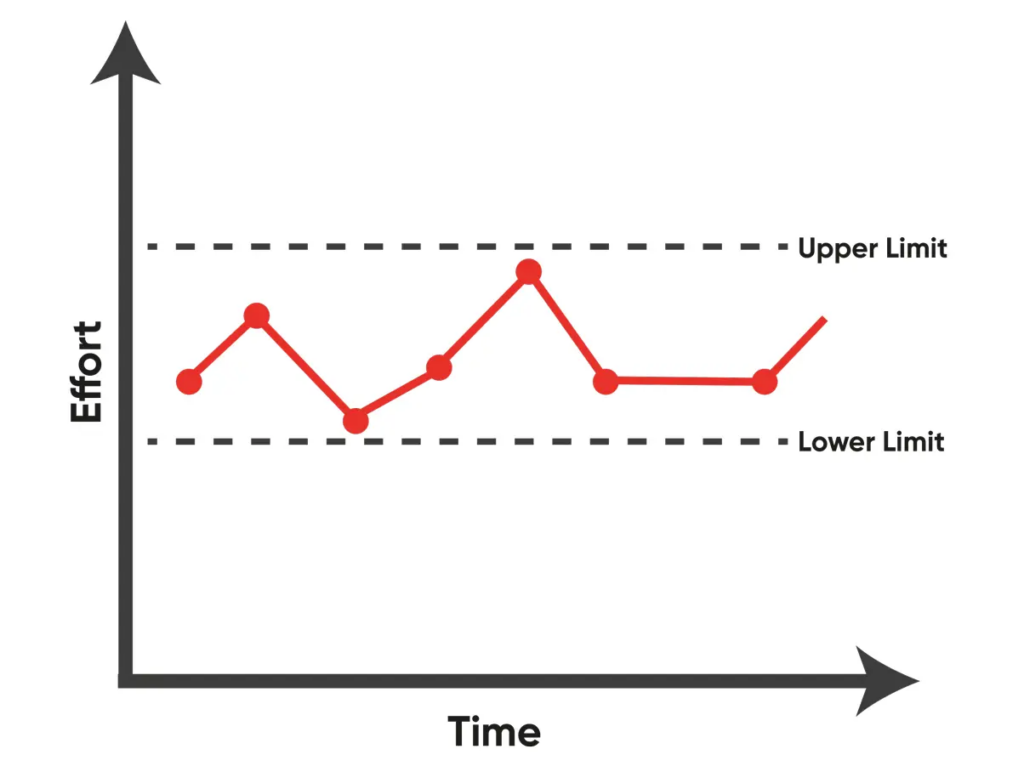
However, the real beauty of the method is the establishment of upper and lower limits within your company’s day to day running.
The lower limit ensures that you remain consistent in working towards your goals, even on bad days where the motivation just isn’t there.
On the other hand, the upper limit means that when times are good, and growth happens quickly, you don’t overwork yourself to exhaustion.
Working together, these two limits keep you in a ‘sweet spot’ of productivity, which also prioritises your well-being, leading to more growth in a sustainable way.
This is a key model and approach we’d recommend for driving, maintaining and managing business growth.
UK Growth Coach
Here at UK Growth Coach, we use a chart like the one below to map out business growth and work with our clients to achieve their goals depending on where they are starting and where they are aiming to go.

It looks at the big picture of business advancement and touches on a few key moments in a business’s life:
- Start-Up – The beginning of the company
- Basically Functioninal – Providing the service
- Growing (Then Scalable) – Growing team and sales
- Owner Independent – Running without the owner being directly involved
- Exit Ready – Ready for sale
To learn more about how to manage business growth, and the difference business coaching makes to that process, get in touch today for a no-obligation chat.