

As business coaches, we have witnessed first-hand the transformative power of systemising for business owners – in terms of the time it gives back to owners to focus on other things, the consistency in quality, the ability to effectively delegate, increased productivity and performance and much more.
It may sound like a daunting task, or something that you don’t have time to do but we guarantee it is worth it in the end for your business’ results and you personally!
This blog explores what systemising means for SMEs, and how it can achieve growth and efficiency in your company.
Understanding systemising
So, what exactly is systemising, and what does it mean for your company?
Systemising involves creating and implementing structured processes and procedures within a business to streamline operations, enhance productivity, and promote consistency. Think of it as the backbone of your organisation, providing the framework upon which all activities and tasks are built and executed – who does what, when and how.
From customer service protocols to inventory management systems, systemising touches every aspect of a business, ensuring that workflows are standardised and optimised for maximum efficiency.
It lays out clearly who is responsible for which actions and what tools are needed at each stage too.
By creating these systems, you are actually empowering your team to operate seamlessly, efficiently, effectively and to a high standard because you have established best practices and clear guidelines for them.
Systemising eliminates many of the day-to-day issues that can come up when team members don’t know exactly what to do. By setting out clear guidelines for everyone to follow you maximise efficiency and reduce process mistakes.
The importance of systemising in the modern workplace
In today’s business environment, characterised by rapid technological advancements and ever-changing consumer demands, adaptability and agility are crucial skills for business owners to have.
This is where systemising truly shines. By creating structured systems and processes, business owners can handle complexity with ease, responding easily to market shifts and emerging opportunities because they know that their systems work regardless of what is thrown at them.
Moreover, systemising works hand-in-hand with scalability, enabling businesses to grow and expand without compromising quality or coherence. A system means anyone can be trained to complete a task – meaning you don’t have to do! For any small business owner who wishes to scale beyond their own time constraints, a system is essential.
Whether you’re a startup looking to establish a strong foundation or a seasoned SME aiming to optimise workflows, embracing systemising will help propel your organisation to bigger and better results!
Getting started with systemisation
The key lies in strategic planning, thoughtful implementation, and continuous refinement. Here are some practical steps to get started:
Identify key processes: Begin by identifying the core processes and workflows that drive your business forward. This could include everything from sales and marketing to HR and finance. We call this a Systems Overview Map but you may see it referred to in other ways.
Document procedures: Once you’ve pinpointed your key processes, take the time to identify what is and isn’t already documented. What you are aiming for is clear, comprehensive documentation that ensures that everyone in your organisation understands their roles and responsibilities, minimising errors and miscommunication.
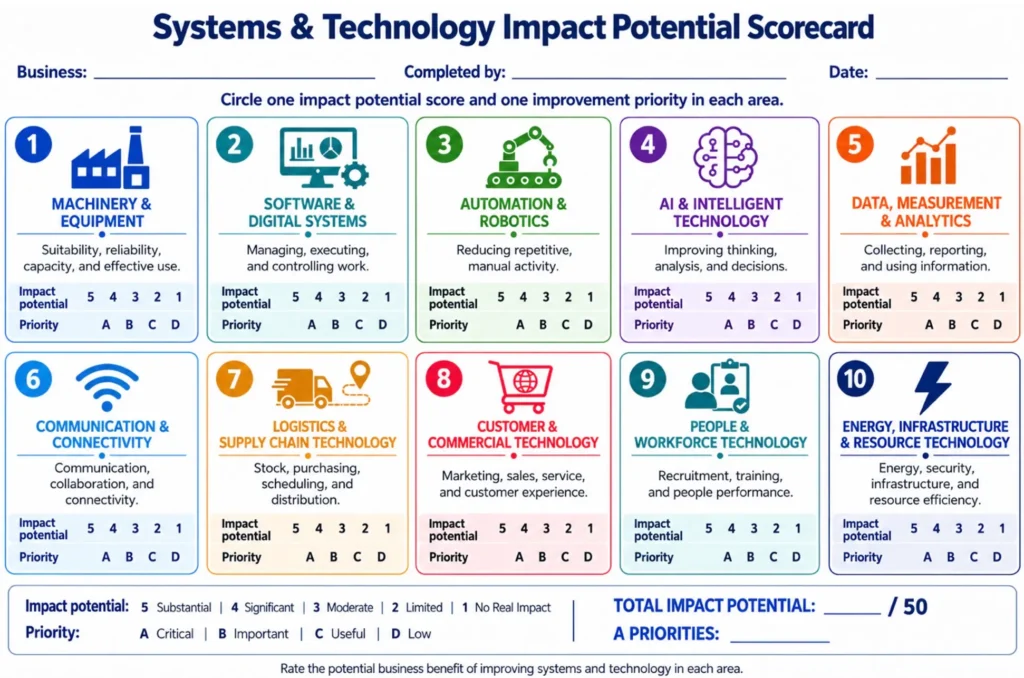
Implement tools and appropriate technology solutions: Embrace technology solutions that support systemising efforts, such as project management software, CRM systems, and automation tools. These tools help to streamline operations, enhance collaboration, and provide valuable insights for informed decision-making. Importantly, these are tools and not the process itself and ensure you use them as your business needs, don’t be a slave to the tech!
The benefits of systemising
Systemising brings with it a whole host of benefits, but how do these apply to SMEs?
Here are a few ways that systemising is particularly effective for smaller enterprises, helping them to achieve their business goals more effectively.
Streamlined operations: Small business owners and their team members often wear multiple hats, juggling various tasks and responsibilities.
Systemising allows small businesses to streamline their operations by clearly defining roles, responsibilities. For example, implementing a standardised process for handling customer inquiries or managing inventory.
Consistent customer experience: Providing a consistent customer experience and delivering a quality service / product is essential for building trust and loyalty. Systemising enables small businesses to deliver consistent service by establishing clear guidelines and protocols for customer interactions.
From greeting customers to handling complaints, having standardised procedures ensures that every customer receives the same level of quality and attention.
Improved time management: Time is a precious resource for small businesses, and wasted time can directly impact the bottom line. Small businesses can free up valuable time for more strategic activities by systemising repetitive tasks and automating routine processes.
For example, automating invoice generation or scheduling social media posts can help small business owners focus on growing their business rather than getting bogged down in administrative tasks.
Scalability: Systemising lays the groundwork for scalability by creating a solid foundation of processes and systems that can adapt and evolve with the business.
For example, implementing a scalable CRM system allows small businesses to manage customer relationships more effectively as they expand their customer base.
Enhanced decision-making: Systemising gives small business owners access to valuable data and insights that can inform decision-making. By implementing systems for tracking key metrics and performance indicators, small businesses can gain a deeper understanding of their operations and identify areas for improvement.
For example, analysing sales data helps small business owners identify trends, forecast demand, and make informed inventory management and marketing strategy decisions.
If you’d like to get some more tailored recommendations and find out how systemising can be most effectively implemented in your business, why not reach out to one of our experienced coaches today?
Systemising with UK Growth Coach
In conclusion, systemising is not just a buzzword – it’s a powerful tool that will drive operational success, and fuel sustainable growth within your business.
By embracing systemising principles and integrating them into your business strategy, you will unlock new opportunities, overcome challenges, and achieve your full potential as a business owner.
So, why wait? Start systemising today and pave the way to ongoing success.
To book a no-obligation business review, click the Calendly link here.