

Business coaching for accountants: Why accountants benefit from business coaching
A lot of accountants build strong, respected firms, then find themselves in a position that looks successful from the outside but feels increasingly heavy from the inside. The work keeps coming in, deadlines do not soften, compliance obligations keep moving, and client expectations keep edging further towards advisory support rather than simple year-end delivery.
That is usually the point at which business coaching for accountants becomes relevant. Not because the firm is failing, but because technical expertise and professional standards do not automatically solve the pressures of ownership. These issues often show up as too much owner dependency, not enough time to think about the strategic future of the business, and a business that is busy but not as controlled as it should feel.
AAT says 34% of employers struggled to recruit for finance and accounting positions in the last year, while 78% of employers reported at least some skills gap. ICAEW has also pointed to skills shortages, regulatory complexity and technology adoption as key risks for accountancy firms trying to grow.
A quick summary
Accounting firm owners are operating in a profession that is changing quickly. Skills shortages, rising expectations around technology and advisory work, new reporting requirements and talent pressure all make the day-to-day heavier than it used to be. Business coaching for accountants helps turn that pressure into clearer priorities, stronger leadership, better profitability and a more deliberate long-term plan.
A busy practice is not always a well-run business
Many accounting firm owners are not short of work. The issue is that being busy does not always mean being in control. You can have a full client base and still feel that too much sits with you, margins are tighter than they should be, and any ambition to build the firm properly keeps getting pushed behind deadlines and client demands.
That is one of the reasons business coaching for accountants can make all the difference. It helps firm owners run their businesses more deliberately and build their ownership capabilities rather than relying on great financial controls and acumen.
You can be flat out and still have:
- too much reliance on the owner
- weak visibility on which work is genuinely profitable
- advisory ambitions constantly pushed aside
- recurring people issues that never fully get resolved
- no proper long-term plan beyond getting through the next cycle.
Those issues are not unusual in this profession. ICAEW’s mid-tier research points to growth potential in the sector, but also rising risks around regulation, technology, service-line change and talent.
Why accountants often reach a change point
The challenges in accountancy are slightly different from a lot of other sectors. Owners are often carrying technical responsibility, client management, commercial decision-making and team leadership all at once. That can make a firm look healthy on paper while still feeling difficult to lead in practice.
This is where a business coach for accountant firms can be useful. The value is not in teaching someone how to be a better accountant. The value is in helping them run the firm better: improving planning and priority setting, building leadership confidence, strengthening communication, improving marketing and sales, and making the business less dependent on one or two key people (among other areas). The need for these skillsets is becoming more obvious as the profession changes around firm owners.
For example, ICAEW has highlighted rising demand for skills beyond traditional technical capability, including systems integration, cloud capability, empathy and communication.

The day-to-day problems coaching can actually help with
In practice, business coaching is not about vague motivation. For accountants, it is usually about making the firm more effective in very practical ways.
That might include:
- too much partner or owner dependencies
- weak delegation because key decisions still sit at the top
- poor visibility on client mix and profitability
- difficulty creating time for strategy or service development
- recurring people issues and communication gaps
- growth that increases pressure faster than it increases reward.
These are the sort of issues that sit in the gap between professional competence and business control. They are also the sort of issues our coaching is designed to address. A technically strong firm can still feel reactive, stretched and over-reliant on the owner if the business side has not evolved at the same pace.
Why business growth in accountancy needs structure, not just effort
Many firm owners respond to pressure by pushing harder. More checking. More oversight. More late decisions. More of their own time. That approach can work for a while, but it has limits. If every new layer of growth creates another layer of owner stress, the model is not really working.
Long-term business growth in accountancy needs structure. Better visibility on numbers. Better communication. Sharper choices about client mix and services. Stronger leadership habits. A more deliberate plan for how the firm should develop. That is where business coaching for accountants becomes commercially useful. It helps move the firm away from constant reaction and towards a more intentional model of growth.
What UK Growth Coach offers accountants specifically
This is where it helps to move beyond the general idea of coaching and look at our own model.
At UK Growth Coach, we focus on helping good businesses become better by closing the gap between their potential and real-world performance. For accountants, that usually means the gap between being technically strong and being genuinely in control of the business.
Our Coaching Star model
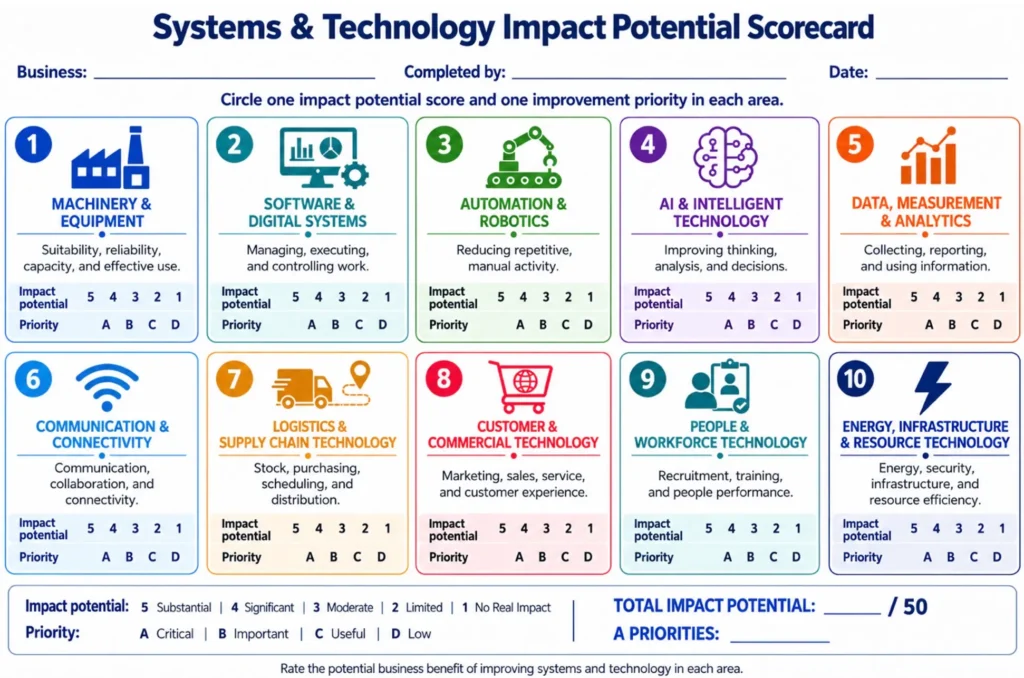
Our Coaching Star model looks across 10 core areas of business performance, helping identify where the real pressure is coming from. In an accountancy firm, the obvious problem may look like workload, but the root issue might sit in leadership, profitability, client mix, team structure, planning or communication.
Our Profit Flow model
For accountants, this matters a great deal. Plenty of firms are busy, but not all of them are making the profit they should for the effort involved. Our Profit Flow model helps owners look more clearly at where profit is being created, where it is leaking away and what needs to change to make the numbers feel healthier and more deliberate.
The Independence Programme
A lot of accountants do not necessarily want a huge national practice. They want a firm that works properly and gives them more freedom of choice. Our Independence Programme is about building a business that does not depend on the owner for everything, all the time.
That does not happen by chance. It takes planned action, better delegation, stronger systems, clearer expectations and the confidence to stop carrying things that the business should be able to carry itself.
A practical next step
If you run an accounting firm and the business feels heavier than it should, it may simply mean the firm now needs a better structure, a clearer model and stronger support than it did a few years ago. Alternatively, you may have ambitions for the future of your firm, but want the confidence and clarity to make progress faster and with a greater likelihood of success.
That is where business coaching for accountants will make a real difference.
📞 01444 440500
📩 connect@growthcoach.co.uk

FAQs
What is business coaching for accountants?
It is business coaching tailored to the realities of running an accounting firm. That usually includes profitability, leadership, delegation, team performance, communication, planning and reducing reliance on the owner.
Why would an accountant need a business coach?
Being a strong accountant is not the same as running a strong business. Coaching helps bridge that gap and improve how the firm operates day-to-day and long-term.
Is a business coach for accounting firms only useful for larger practices?
No. We work with small and medium-sized firms. They benefit a great deal because the owner or partner is usually carrying too much. Coaching can help create a stronger structure earlier and avoid some fairly painful growing pains later.
Can business coaching help with profitability?
Yes. It can help accounting firm owners look at client mix, pricing, margins, delegation, service lines and internal efficiency, so profit starts to match effort more closely.
Why is this especially relevant for accountants right now?
Because the profession is changing. AAT has highlighted recruitment and skills shortages, ICAEW has highlighted growth risk and service-line change, and the FRC continues to issue updates affecting reporting frameworks.
Does AI make business coaching more relevant for accountants?
Potentially, yes. ACCA has pointed to AI shifting accountants towards higher-value advisory, interpretation and communication work, which means firm owners need to think more carefully about team capability, service mix and leadership.
What is the Independence Stage?
It is the point where the business gives the owner more freedom of choice, rather than depending on them for every important decision. In our model, that is a key stage of growth for many owner-led firms.
Does coaching only help with growth?
No. It can also help with building resilience, having greater control, better communication, stronger profitability, reducing stress and having a clearer long-term direction. Growth matters, but it is not the whole point.
What if my firm is doing well on paper, but still feels hard to run?
That is exactly the kind of situation where coaching can help. A healthy-looking firm can still be overly dependent on the owner, have a sub-optimal structure or be harder to lead than it needs to be.
What is the first step if I think my accounting firm needs support?
Start with a proper conversation about where the pressure is really coming from. That is usually the fastest way to work out what needs to change first.